Author: Stewart Ho

  • Recipe: Beef Soondubu Jjigae (순두부 찌개)

    Recipe: Beef Soondubu Jjigae (순두부 찌개)

    I’ve been fortunate enough that this current winter has thankfully been the mildest I’ve had in Korea yet. But we’re still talking negative double digit temps here on some nights so it’s no surprise I’ve been craving a lot of hearty and warm dishes for dinner lately.

    Soondubu jjigae, or soft tofu stew, is a fine example of Korean comfort food and perfect for winter nights. Of course, even if there isn’t an arctic blast in your air outside currently, soondubu can be enjoyed in all weathers and climates.

    This recipe is for a basic beef-based soondubu jjigae but it’s adaptable to your preferences and your addition/subtraction of ingredients. You can substitute the beef for shiitake mushrooms, add in some kimchi, etc.

    Whatever taste you like, this is a good, basic soondubu jjigae template you can use to keep yourself warmed up as you wait out the winter!

    Soondubu

    Beef Soondubu Jjigae (소고기 순두부 찌개)

    Makes approximately 2 servings

    You’ll need:

    – 1 package of Soondubu (extra soft tofu)

    (it usually comes in the mart in a tube shape like this:

    – 1 tbsp of Sesame Oil

    – 2 tbsp of Red Pepper Flakes

    – 1/4 cup of Onion, chopped into small pieces

    – 1/2 tbsp of minced Garlic

    – 1 tbsp of Soy Sauce

    – 1 tbsp of Salt

    – 1 Egg

    – Handful of chopped green onions

    For beef and marinade:

    – 1 cup of cubed Beef (usually Korean marts will sell cubed ‘stew beef’ but you can use cuts like beef skirt cut into cubes. You can also use pork)

    – 1/2 tbsp of minced Garlic

    – 1 tbsp of Soju

    – 1.5 tbsp of Soy Sauce

    – Pinch of Salt and Pepper

    For the broth:

    – 1 Green Onion, roughly cut into 2 inch pieces

    – 1/4 Onion, chopped into small pieces

    – 1/4 cup of chopped Daikon Radish, cut into squares

    – 5 small pieces of Dashima

    – 10 Dried Anchovies, heads and guts removed if you wish

    – 5 cups of Water

    1. Begin by combining all the marinade ingredients with the beef cuts, mixing and setting aside

    2. Broth is the secret to any good stew and soondubu is no exception. In a pot, add in the water and all the ingredients for the broth except the dried anchovies. Bring to a boil on high heat then bring down heat to medium for the next ten minutes.

    During this step, you can also add in a handful of Manila Clams or baby shrimp for added flavor and taste.

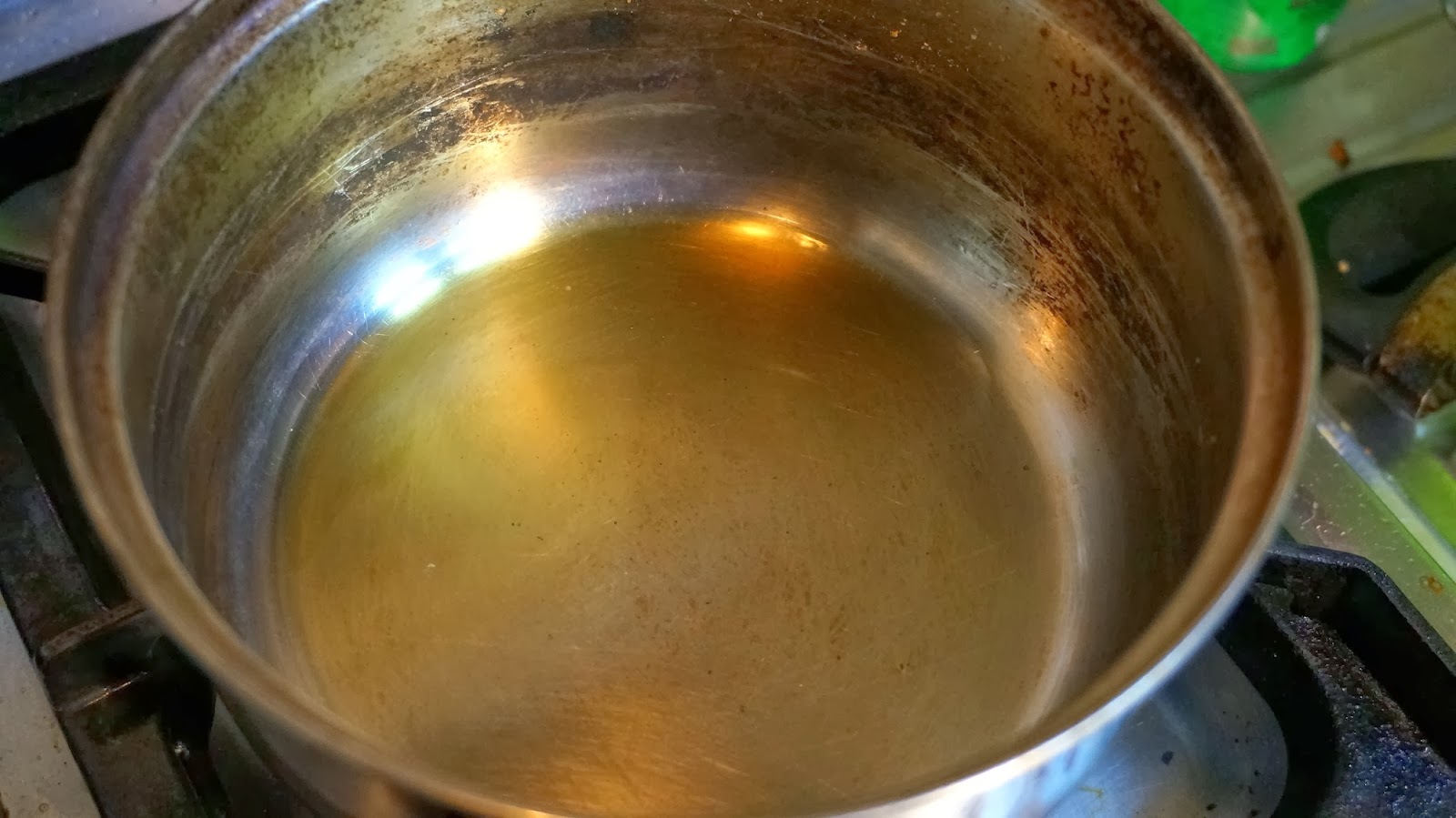
    3. After ten minutes, add in your dried anchovies and continue cooking for 15-20 more minutes on medium to medium-low until you get a nice pale golden broth.

    Tip: Adding in the anchovies towards the end will help bring out a cleaner tasting broth, resulting in a cleaner tasting soondubu jjigae.

    Discard all the broth making ingredients and set aside the broth. You should be left with roughly 2 big cups of broth.

    4. Now let’s make the seasoning for the soondubu which will be done in the pot. Begin by making the chili oil. On medium heat, add the sesame oil and red pepper flakes to make the chili oil. Stir and cook for a minute.

    Note: Making the soondubu jjigae from this point in an earthenware pot will help keep the jjigae nice and bubbling from stove to table, much like it comes in restaurants. I, unfortunately, don’t have an earthenware pot anymore so if you’re like me, don’t worry about using a regular, sturdy pot.
    proxy?url=http%3A%2F%2F3.bp.blogspot.com%2F dbQ TmnMYm4%2FUr1LWJ7WPYI%2FAAAAAAAAFhk%2F6ykPjRg6O2k%2Fs640%2FDSC09605

    5. Raise the heat to medium high and add in your marinated beef and onions to the same pot and mix around for another minute or two. Then add in two tbsp of the broth you just made, the minced garlic, the salt and the soy sauce. Stir and cook for another minute. Your seasoning is now ready in the pot.

    6. Add in the rest of the broth, stir, and bring it to a boil on high heat. During this time, taste and adjust the broth taste to your liking.

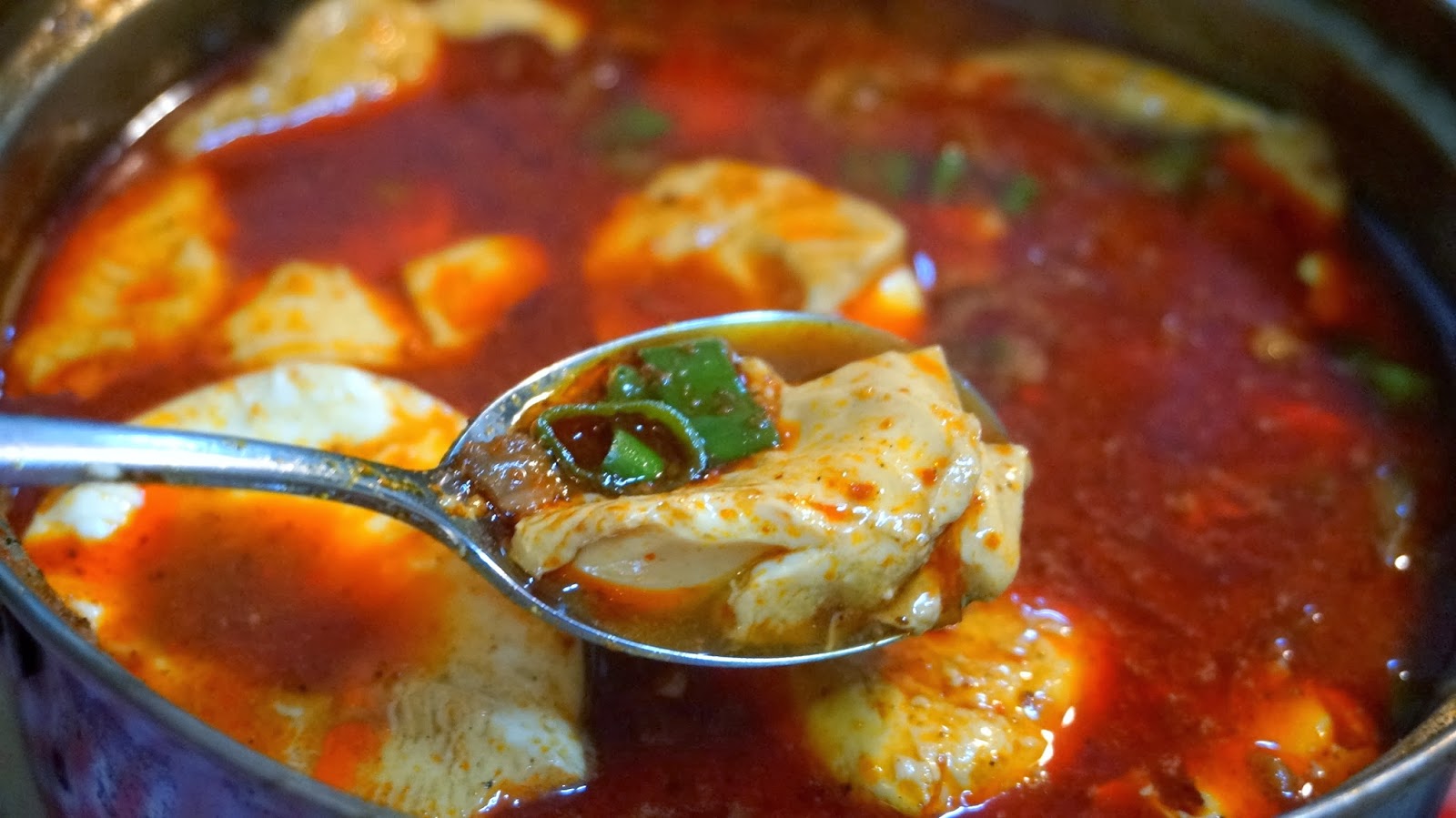
    7. Cut your soondubu in half and scoop out big spoonfuls of the soft tofu and add to the broth. Crack in your egg and lower the heat to medium.

    Try and adjust the egg to let it be submerged to cook faster but resist the urge to break up the tofu. After about 3-5 minutes the soup should start to boil again. At that point, turn off the heat, add your chopped green onions, and serve immediately.

    Tip: Don’t worry about feeling you have to over cook the tofu. The longer you cook the tofu, the more it will draw out the water from inside the tofu resulting in a blander soondubu jjigae. Keeping the cooking time short once you add in the soondubu will allow you to simultaneously enjoy the spicy and savory flavors of the broth as well as the mellow and creamy taste and texture of the soondubu.
    proxy?url=http%3A%2F%2F3.bp.blogspot.com%2F gSAiKwUOKQs%2FUr1LafWAmwI%2FAAAAAAAAFiQ%2Fr63Se8tQgFI%2Fs640%2FDSC09617

    Enjoy with hot rice and plenty of side dishes!

  • Korean Style Arrabbiata Sauce

    Korean Style Arrabbiata Sauce

    “Fusion” Korean-Italian dishes aren’t unique in Korea but they’re often quite pretentious. Pasta dishes in general still convey a “luxurious” image in Korea and this somehow justifies the often exorbitant prices in restaurants for Italian dishes (with their names italicized on the menu for added effect).

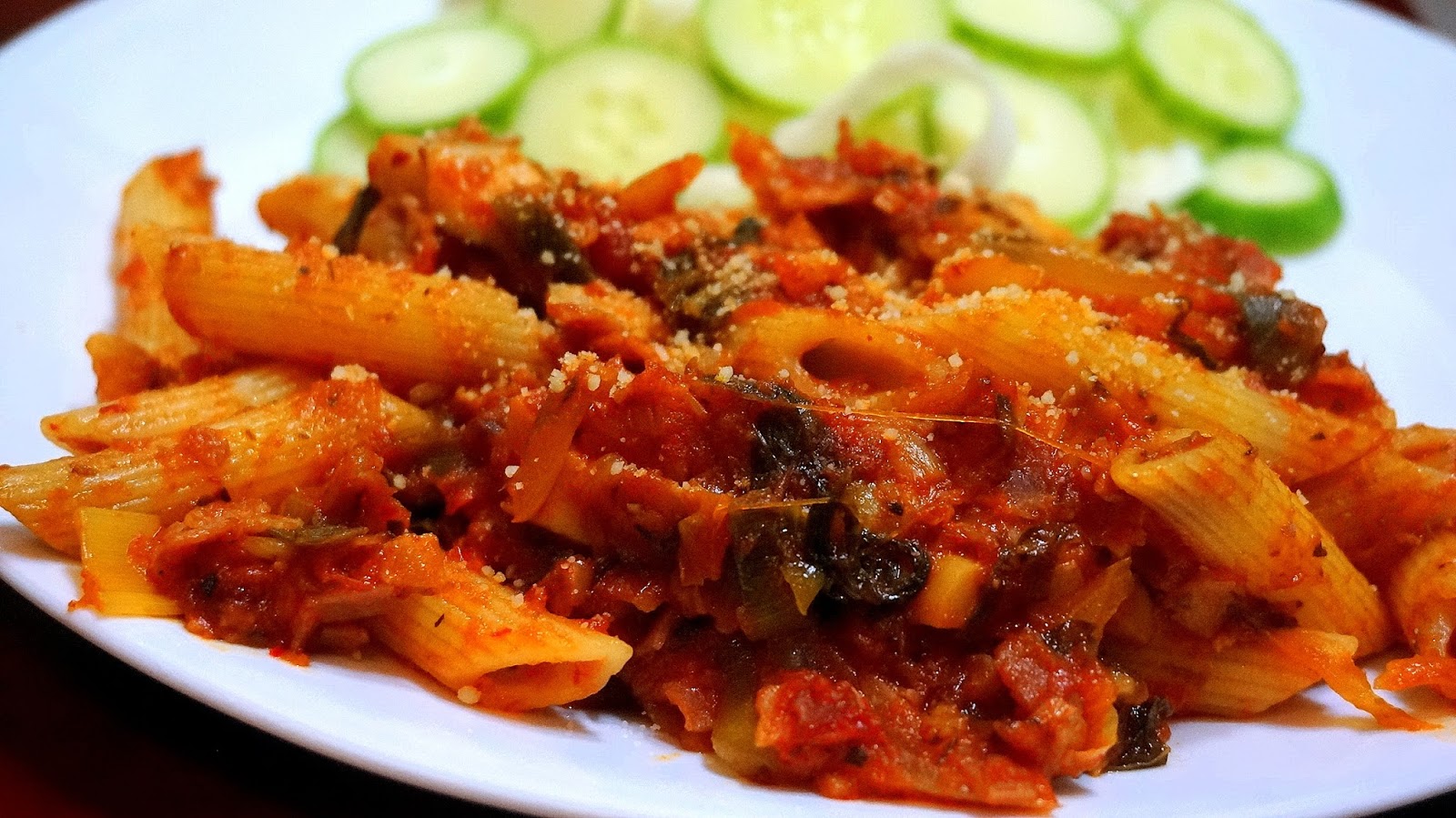
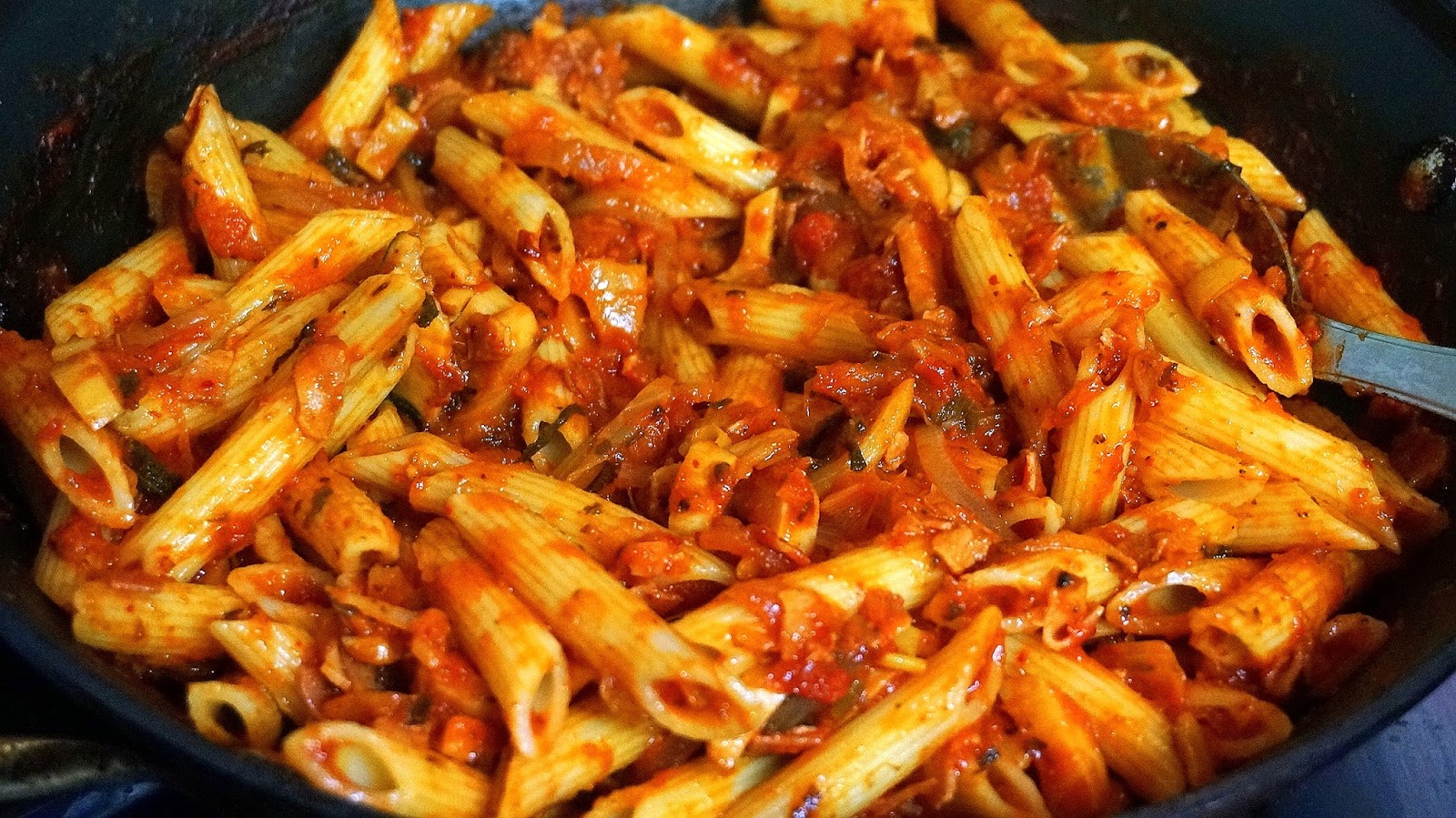
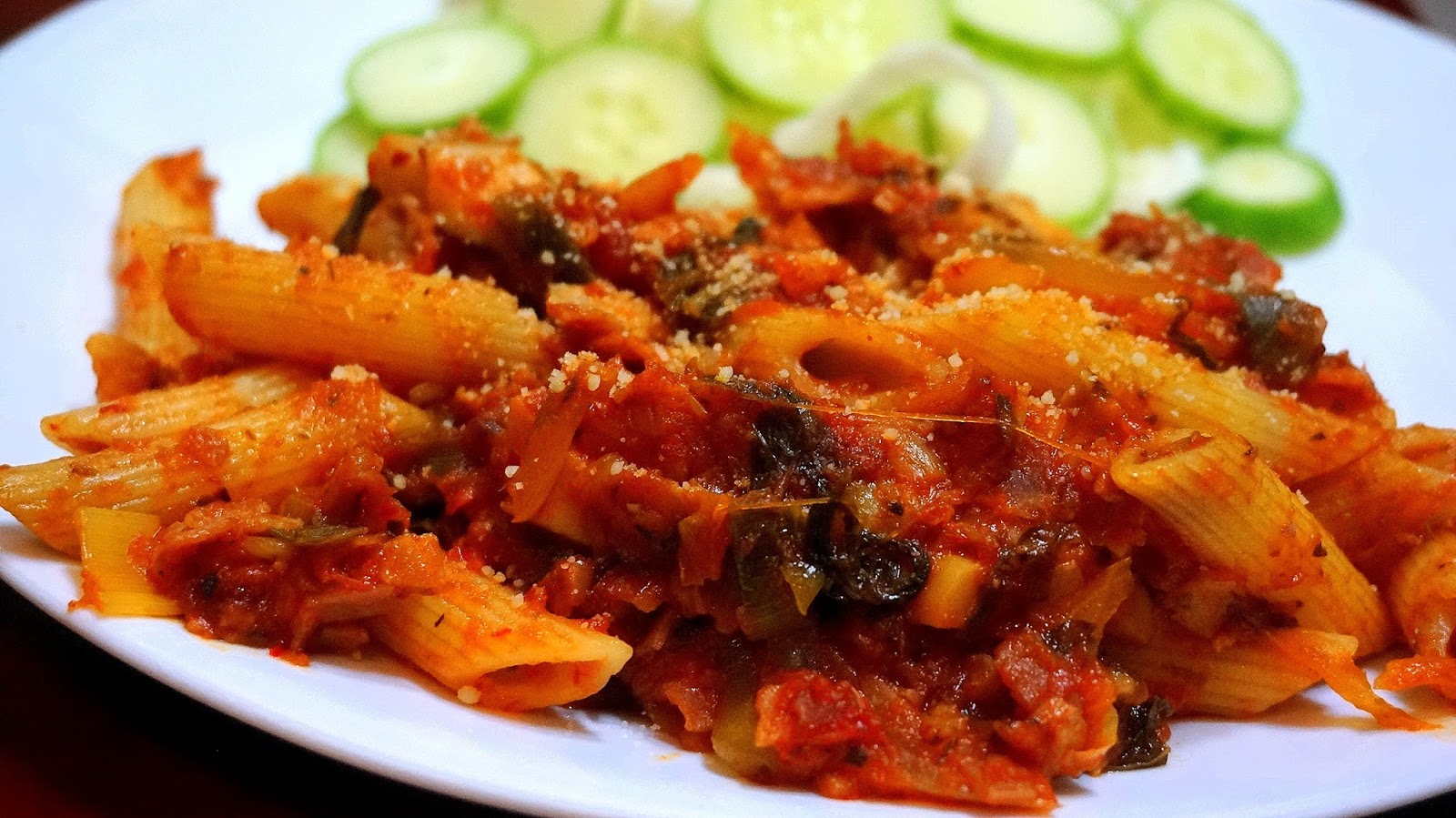
    Arrabbiata sauce, however, is an inexpensive and common spicy sauce in Italian cooking with arrabbiata literally meaning “angry” and referring to the dish’s heat. The dish is a simple one that traditionally uses ingredients such as tomatoes, basil, garlic and crushed red peppers. In Korean cooking, kimchi, pork belly, perilla leaves (“kkaetnip”) and red pepper paste (gochujang) are common ingredients so I experimented with a swapping to make this hybrid dish. It’s Italian arrabbiata meets a Korean pork belly wrap.

    I don’t claim it to be a glorified version of anything. It’s just something that simply came out of wanting the best of both worlds for a humble meal.


    DSC065614


    Korean Style Arrabbiata Sauce

    Makes 4 servings


    You’ll need:

    • 1 1/2 cup of Penne pasta

    • 1 cup of ripened Kimchi (chopped)

    • 2 Garlic cloves (minced or sliced)

    • 6 Perilla leaves (sliced into strips)

    • 1 stalk of Green Onion

    • 1 tbsp of Red Pepper Paste (Gochujang or 고추장)

    • 150g of Pork Belly or Bacon

    • 1 28 oz can (about 3.5 cups) of Crushed Tomato or Tomato Sauce (If you have a can of Whole Tomatoes, give it a whirl in a blender before adding)

    • 2 tbsp of Olive Oil

    • 1/2 a medium sized Onion, sliced (optional)

    • 1 cup of sliced mushrooms, sliced (optional)

    • Parmesan Cheese for sprinkling (optional)

    • Red Chili Flakes for sprinkling (optional)


    1. Cook your pasta in salted boiling water until al dante. Drain and set aside when done.


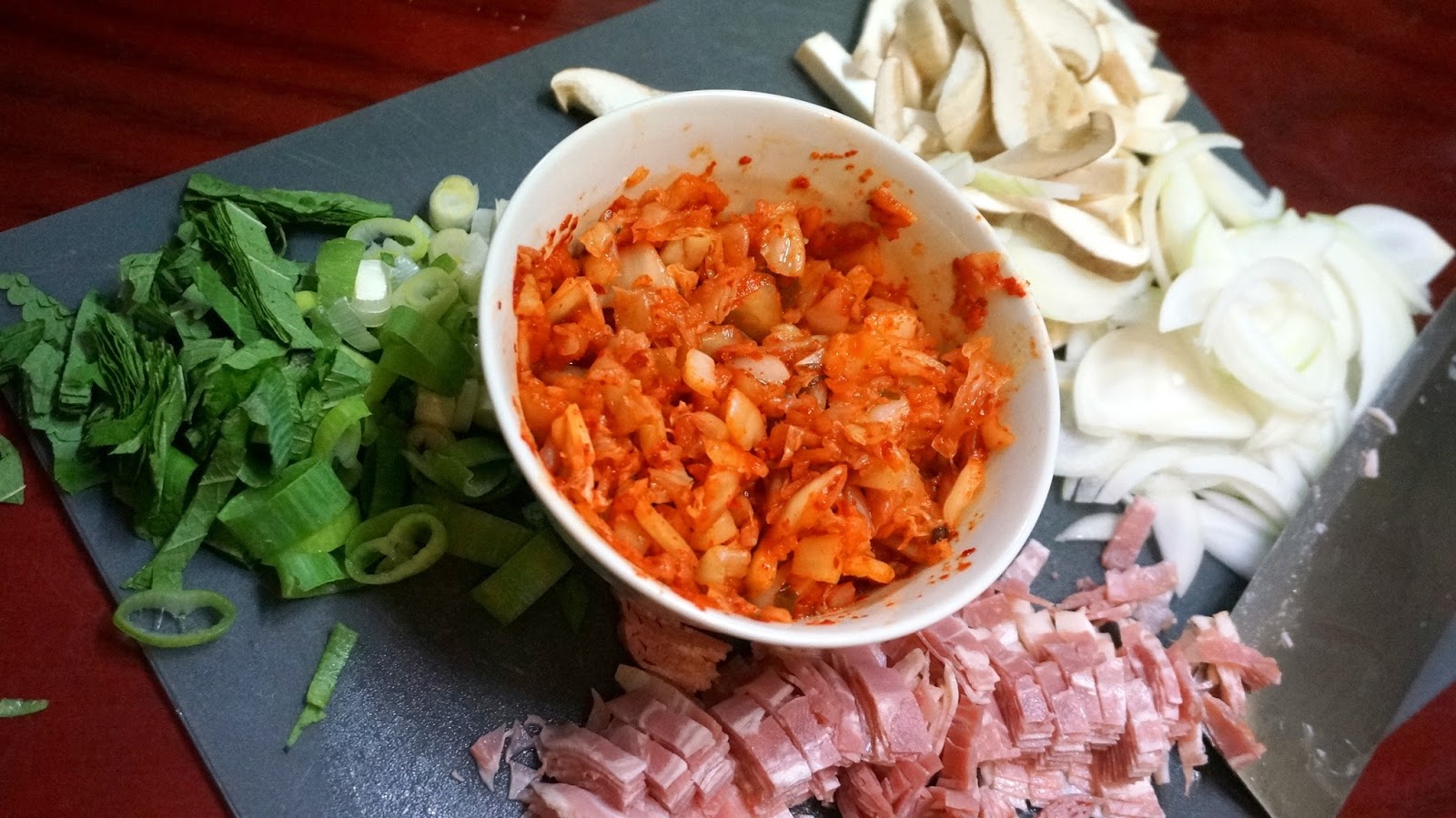
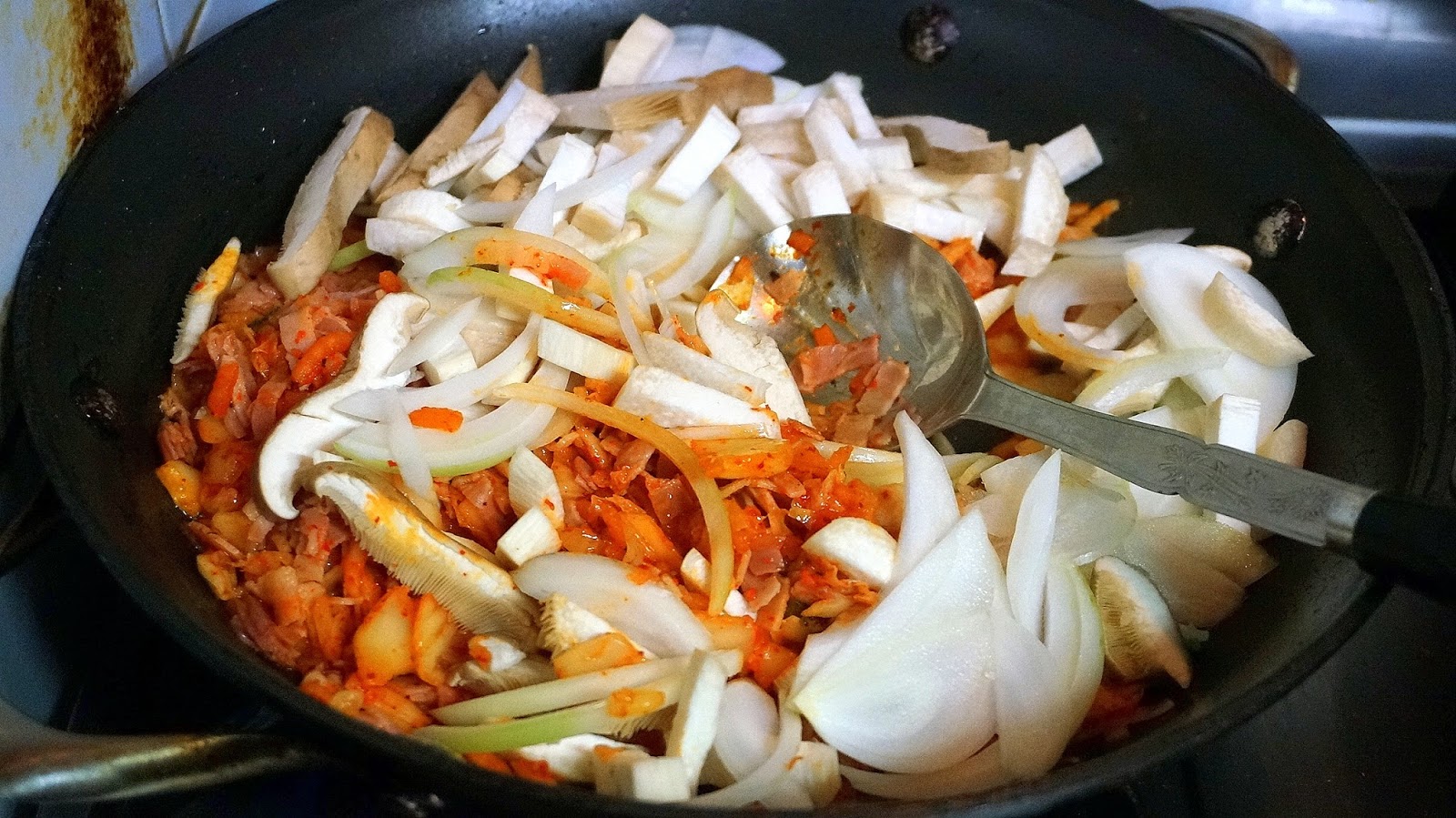
    1. Meanwhile, wash your veggies and cut them as needed. Perilla leaves should be cut into strips, green onion stalk chopped, garlics minced or sliced (depending on your preference). I chose to slice and add some mushroom and onions for added nutrients.


    Chop your ripened kimchi, and slice your pork belly (or bacon) into thin slices. If you like bigger, chewier cuts of meat in your pasta, cut accordingly.


    DSC065472

    Diced, chopped, sliced and ready to go


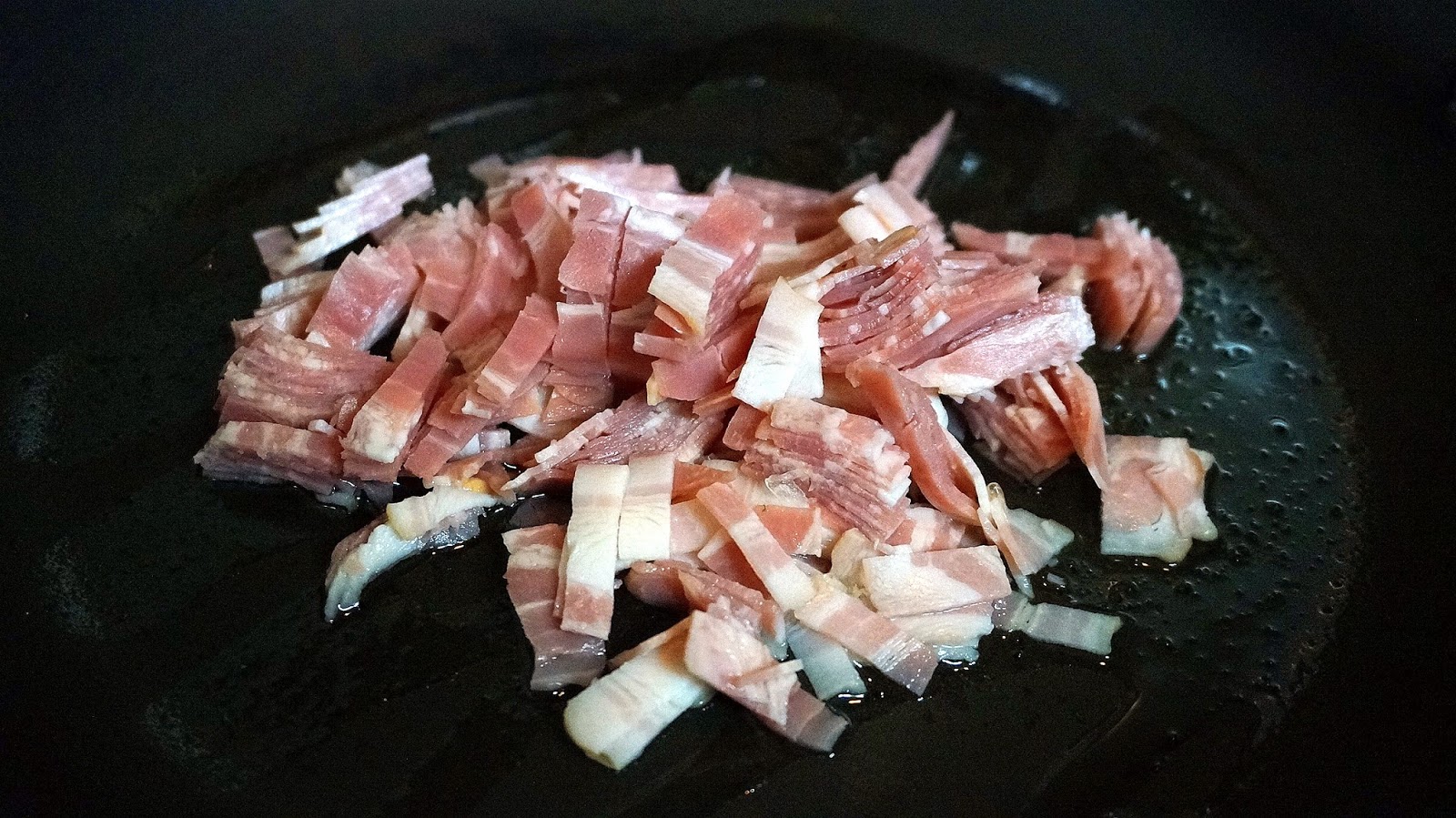
    1. Add just a tad bit of olive oil to your pan on medium high heat. The bacon or pork belly will release a lot of fat on its own. Stir for a minute or two before adding the garlic. Stir for another minute. If the pan is too hot make sure to lower your heat temporarily as you don’t want to burn your garlic.


    DSC065482

    I had bacon on hand, but pork belly should work fine too


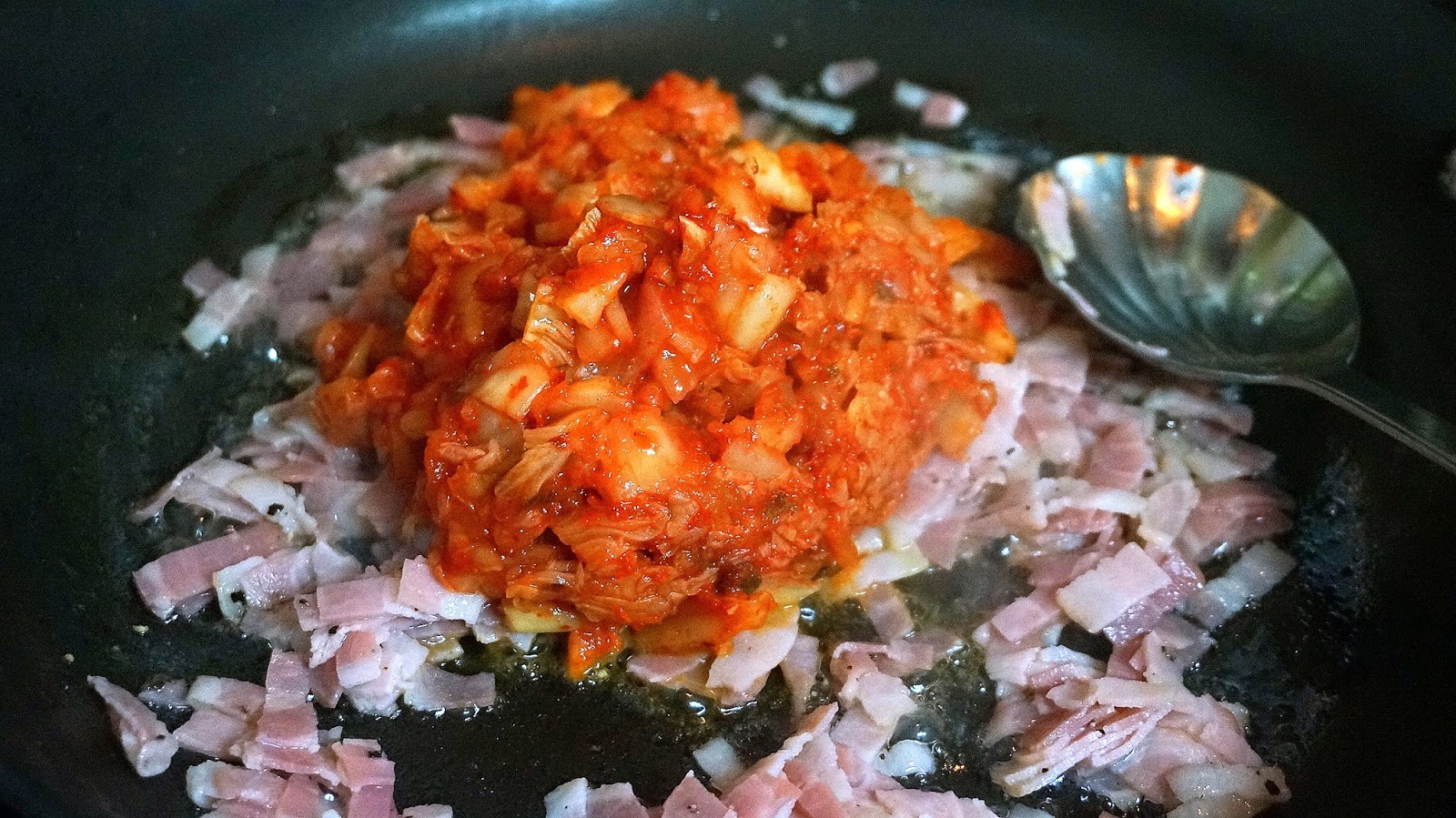
    1. Add your chopped kimchi to the pan, stir and cook for a minute.


    DSC065492


    1. Add your onions and mushroom (or other vegetables) if you choose to add them. Cook until the onions begin looking translucent.


    DSC065522

    The onions and mushrooms are optional and added just for nutrient benefits


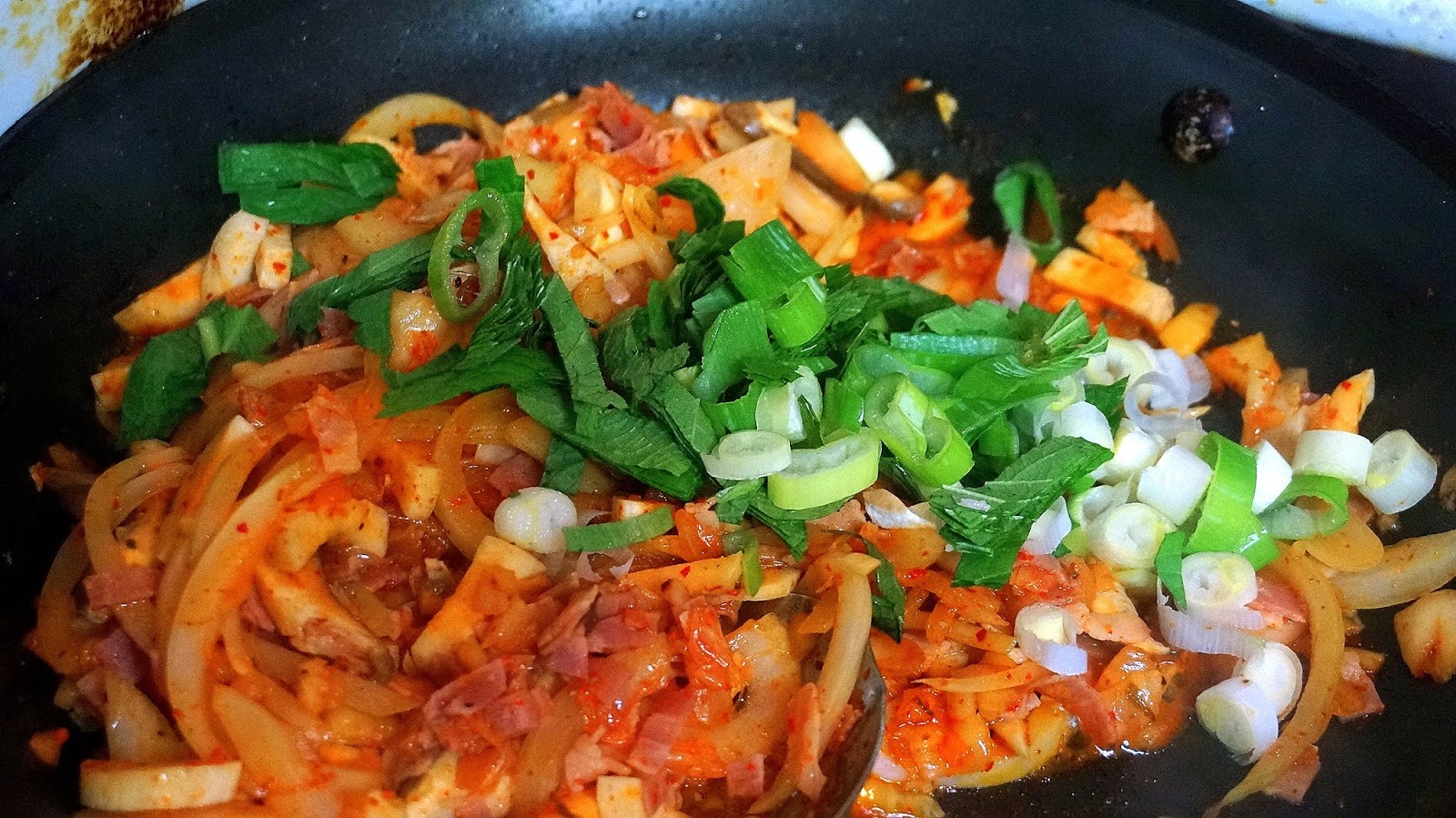
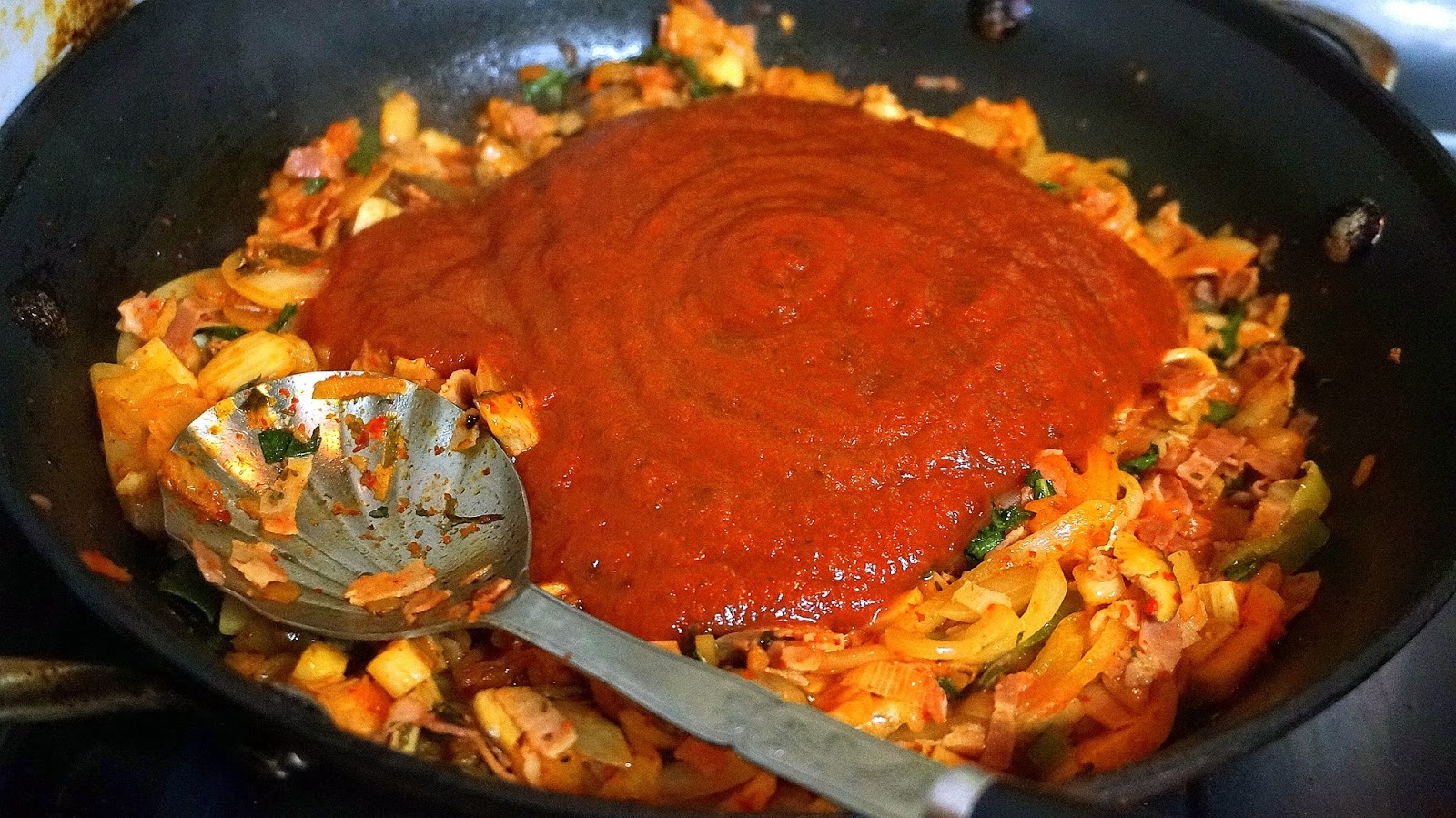
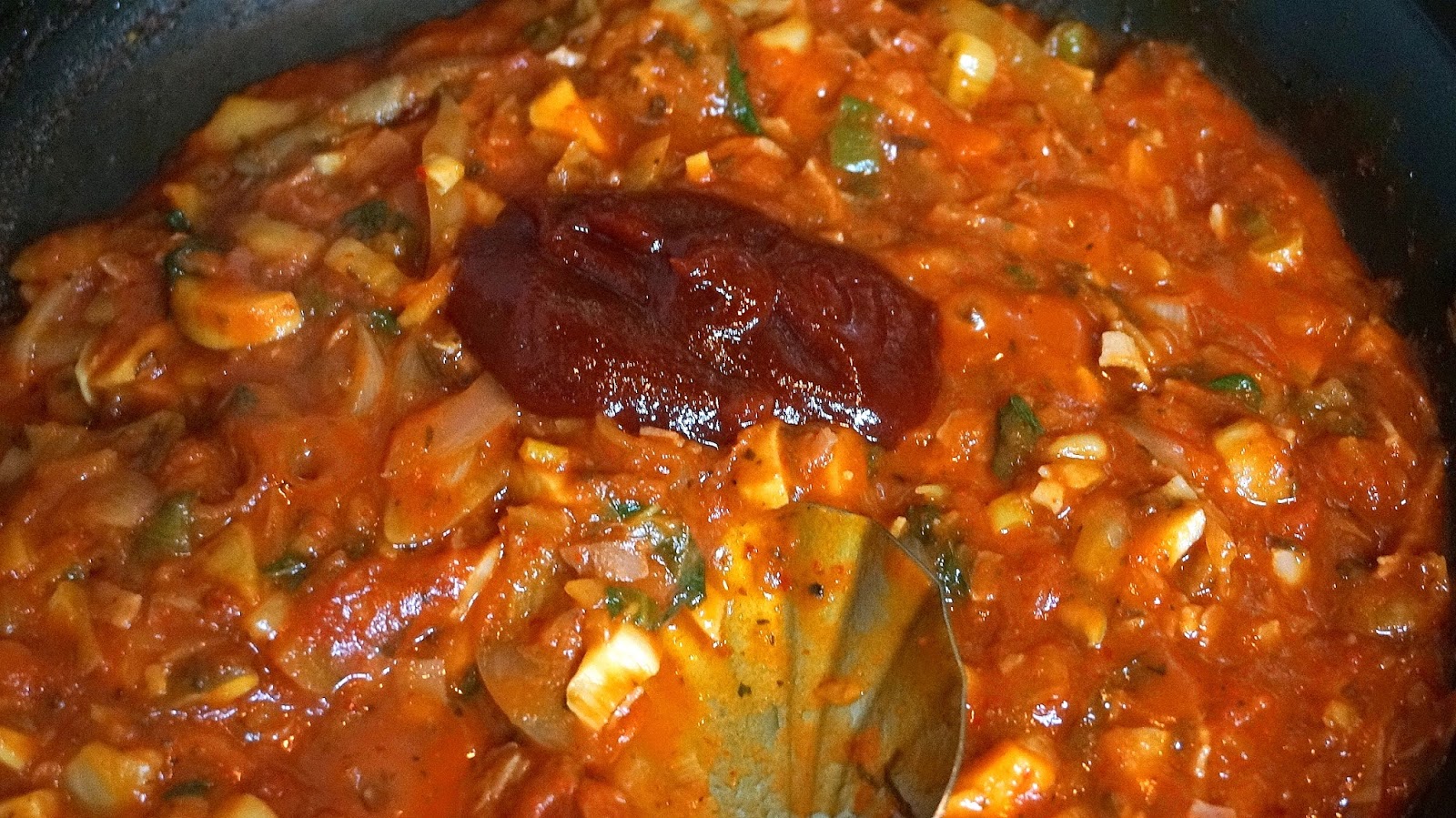
    1.  Add in your green onions and perilla leaves, stir and cook for a minute and then add your tomato paste/sauce. Give it a mix, add the red pepper paste and then mix and cook on medium heat (uncovered) for approximately 6-10 minutes so all the flavors from the pork, garlic, perilla, etc, all incorporate together.


    DSC065531

    Instead of basil, we’re giving it a Korean twist with perilla leaves and green onion


    DSC065562

    Crushed tomato sauce or pasta sauce works fine


    DSC065572

    Red pepper paste for the Korean heat


    1. When the sauce has slightly thickened and finished cooking, turn off the heat. Add in your cooked penne and gently stir so all the sauce thoroughly coats the pasta.


    DSC06560


    1. Serve the pasta immediately and add Parmesan cheese, chili powder flakes to your liking.


    DSC065616


  • Review: Schneeballen Korea's Schneeball Cookies

    Review: Schneeballen Korea's Schneeball Cookies

    Like any city, Seoul goes through seemingly random food trends and fads. Once such a trend hits, you’re bound to see the same food or dish almost everywhere from street food carts to even high end restaurants sometimes.


    One such trend that has arrived in Seoul recently is a type of German cookie/pastry called schneeball. From what I’ve read online, this cookie is traditionally made by taking rolled out shortcrust dough and cutting out strips which are then arranged over a stick into the shape of a ball and then deep fried, dusted with confectioner’s sugar or coated with other toppings.


    I first began seeing these curious shaped ball cookies on the streets of Myeongdong where these strange ball-like cookies were being sold from street cart vendors. They didn’t resemble anything Korean and I presumed somewhere some bakery had made this a hit and had sparked the inevitable copycats on the streets.


    My assumptions proved correct as I found out a company called Schneeballen Korean has aggressively been ramping up their presence with their own stores and department store corners.


    579038 280070102126287 1101392347 n12

    Picture from the Schneeballen Korea Facebook page


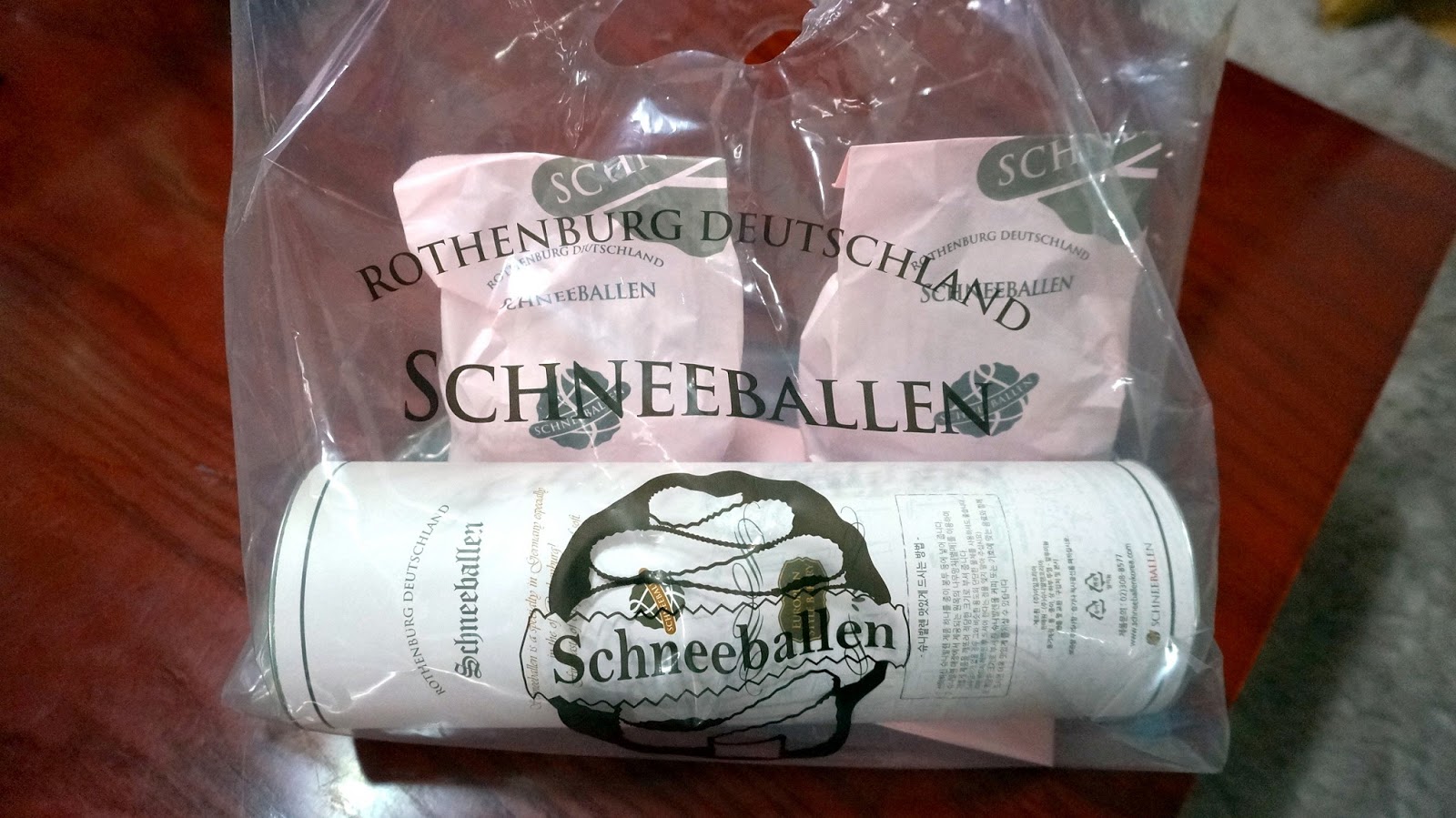
    A friend, on her way from stopping by a shop in a department store, surprised me with a pack one day where we sampled the cookies together.


    DSC0312211

    Five total schneeballens within


    I’m not much of a sweets guy in general so I might have ended up buying one one day out of sheer curiosity but I would’ve never bought myself such a large pack O_O In any case, I was able to sample five different flavors from this company.


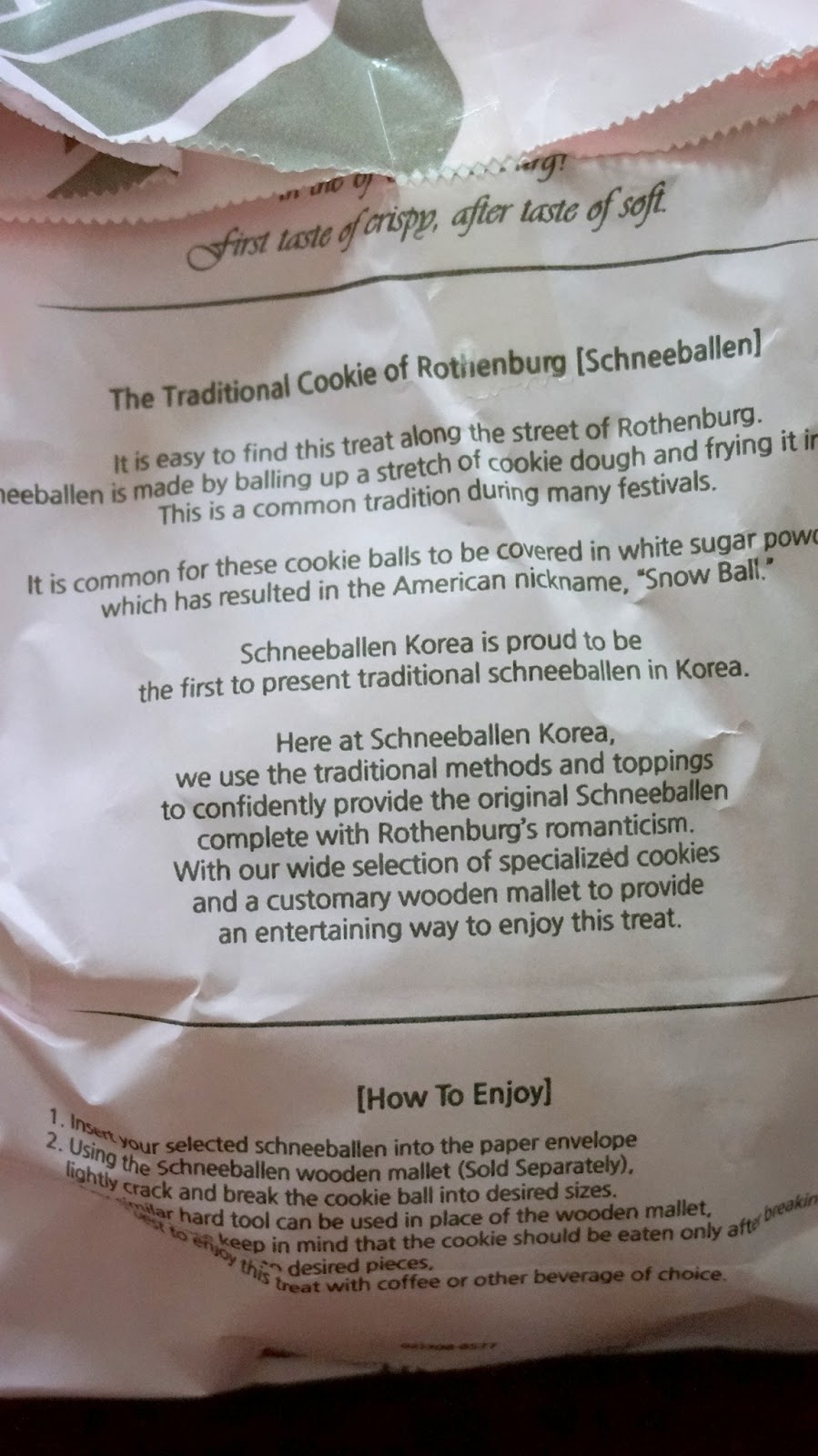
    DSC0312411

    Here’s the explanation on the back of the wrapping


    Though originally schneeballe comes dusted with sugar, at these Korean stores you can get an assortment of different flavors including some curious ones involving garlic or onion.


    The first one I opened up was a brightly yellow colored banana flavored cookie.


    DSC0312710

    A schneeball next to my camera lens cover for a size comparison


    Each ball was big enough to fit in one’s hand. The banana flavored one came dusted in bright yellow banana powder. Though I didn’t have the traditional wooden mallet on hand, I took out my regular hammer and, after wrapping up the schneeball, gave it a few good whacks.


    DSC031319

    After whack whacking


    Cracking it open, I could see the layer of icing that had been drizzled over the cookie before receiving its banana powder dusting.


    The cookie was crunchy, slightly harder and denser than a tortilla chip. The icing provided the sweet kick while the banana powder brought out flavors reminiscent of the popular banana milk around Korea.


    Over the next few days (schneeballe apparently have a slightly longer shelf life being a dry cookie) I tried out the other flavors including…


    DSC034547

    Chocolate…


    DSC034989

    White chocolate…


    DSC035858

    Strawberry…


    And finally a coconut flakes one.


    After sampling a few of the cookies I was very unimpressed with them. The various flavorings and coatings all taste quite a bit artificial with tastes similar to artificial strawberry milk, artificial banana, etc. Given the gourmet packaging and such, I expected a more luxurious taste would naturally follow but they were the sort of taste and flavors one can easily get from the cookies and other baked treats from your local convenience store.


    Now, I can’t say my assessment of schneeballes in general from Schneeballen Korea is the real deal since I haven’t had an authentic one from Germany or anywhere else outside of Korea. Once I perused the Schneeballen Korea site, I found the brand is one that is under a “Sand and Food” company which is a Korean corporation. In addition to the Schneeballen Korea brand, it manages a line of cinnamon buns and cafes too.


    It seems we have yet another case of a Korean corporation looking to make a new big food trend by taking in a food from abroad, Korean-izing it, packaging it nicely, getting some stars to advertise it (in Schneeballen Korea’s case, Tiger JK and Yoon Mirae) and including fancy words appealing to Koreans (“European Style Bakery” for example). The fact Schneeballen Korea is also trying to market it as a high end product is evident to me as they are aggressively opening corners within high end department stores and  also doing a number of promotions with hotels. The brand has begun capitalizing on current food trends by even offering its own take of the popular cronuts and has also begun expanding into the Japanese market.


    I was passing by a Schneeballen Korea store in Hongdae the other day and saw each cookie being sold for over 4,000 won! They’re even looking to profit off the wooden mallets!


    Oh my…


    For that price and for what these cookies essentially are (fried bits of dough rolled in cheap flavorings) this sort of price is definitely not justified. I’d understand the price if the toppings were more luxurious (real pistachio bits or real dark chocolate, etc) or even as far fetched as them bringing in some master baker who churned these out from a bakery… but sorry Schneeballen Korea, you’re not getting another won from me.


    And I’m fairly certain your trend will be short-lived…. (oops, I said it!)

  • Recipe: One Pot Soybean Sprout Rice

    Recipe: One Pot Soybean Sprout Rice

    In addition to oodles of cold noodles in this sweltering heat, another life saver for meals at home has been one pot cooking dishes which also don’t (or minimally) use open-flame gas ranges.

    Soybean Sprout Rice (Kongnamul Bap 콩나물밥) was one of my favorite simple dishes to eat at home while growing up, and I remember eating copious amounts of it with kimchi on the occasions my mom made it for dinner.

    Traditionally, or rather when my mother normally made it, she would give the marinated beef a quick cook on the stove while the rice was cooking. Since this is summer, and I would like to keep the stove off as much as possible, this is my simpler recipe which allows everything to cook in the rice cooker.


    To eat, add a bit of the sauce, mix it all up, and taste and adjust as needed.

    DSC06448

    Mixed and ready to eat!

    Your one rice cooker meal is now served! It goes wonderfully with some cool and ripened kimchi on the side.